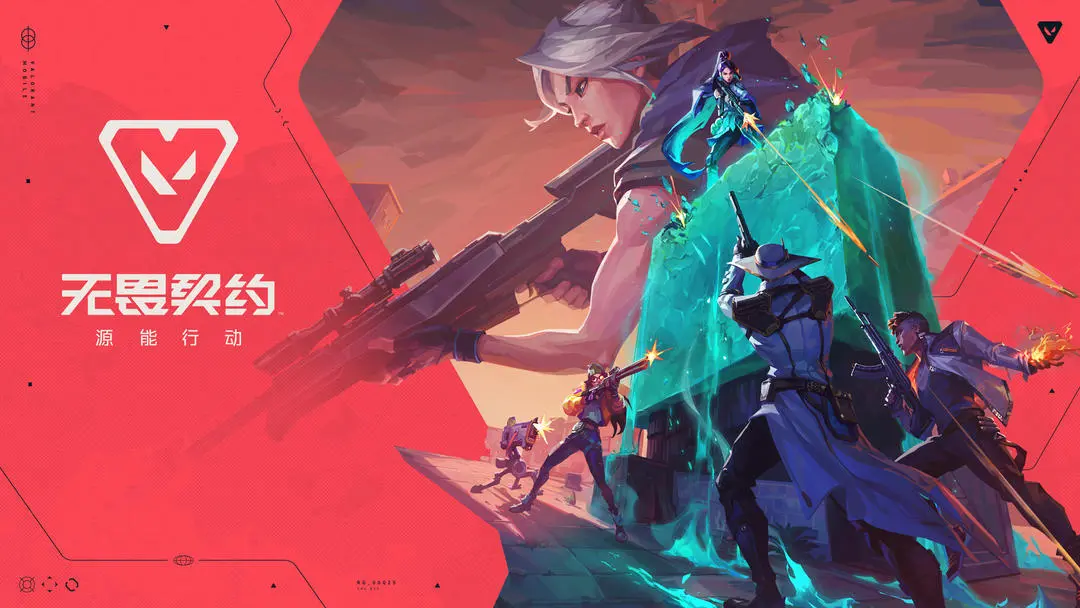
Valorant Mobile has been out for about a month now in China. It’s still too early to know if it has legs, but it’s a decent start. Per Sensor Tower iOS estimates, on a launch-aligned basis, it’s ahead of last year’s Delta Force in downloads and revenue; but it’s a far cry from the pre-pandemic launch of PUBG Mobile in China. I’ve heard vaguely that it has met Tencent internal expectations for the launch. So far so good.
I’ve yet to really play it, just like I barely dabbled in the PC version 5 years ago. (That didn’t stop me from writing a long-ish post.) I did read a bunch of player reviews, and I’ve come away with a few anecdotal opinions.
The core idea is simple, and it’s a formula that the Tencent Quantum Studios teams know well (from their successes with PUBG and League of Legends): execute an authentic (faithful), high-fidelity mobile version of a beloved PC game. Authentic (faithful) doesn’t mean blindly replicating every design decision down to the raw spreadsheet values – but it is a driving design principle in making players feel that they are playing the same game, even at the expense of something that might “fit” mobile better.
In Valorant’s case, this means that the number of rounds per match have shrunk down to “first to 8 wins” (PC was first to 13), which sacrifices a bit of the game economy flow for a shorter session length; and there are small mobile quality-of-life features such as aim-assist and visual foot-steps indicators (PUBG Mobile had the same – acknowledging that many players play without sound). But otherwise, the short time-to-kill, the general gunplay (Counterstrike-like crouch-fire mechanics) are meant to feel the same as PC, even though this type of tactical shooter is a lot more clumsy to play on mobile.
Reading the comments, it seems the game does a decent job at the above. It still feels a bit like the lower-end, fast-food version of a meal you already love, but that was arguably the same case with PUBG and LoL. “Go play the PC version if you can” is a common sentiment – that’s not a bad thing, because the mobile version is the always accessible version, for all of us who can’t play the PC version.
Unfortunately, another thing that seems to have faithfully carried over is the toxicity of the player community in a highly competitive PVP game. The “matchmaking system” remains a universal villain for Chinese players (see the frustrated Honor of Kings player who sued Tencent to publicly disclose the matchmaking algorithm). Even worse, voice chat facilitates widely prevalent harassment of female players (there’s a Valorant meme where male players call female players “mom”).
I also noticed one player sentiment that does seem to be shifting. I saw a number of players complaining about the price of the cosmetics (same as PC version), and also some asking “why are we asked to buy the same thing twice?” This is an understandable sentiment, and there’s plenty of good product/business reasons (including player-focused ones) why sharing PC-mobile inventory is not the right product call.
Indeed, we went through this whole argument in the Riot team for League of Legends and the mobile Wild Rift around 2018. I wasn’t the ultimate “decider” but I was firmly against any sort of shared inventory:
- While the PC game was popular in many markets globally, there were vastly more future players on mobile. If I were a mobile-only player, I would be greatly discouraged by the PC veterans and their accelerated content progression
- For PC veterans, it could set false expectations that the content of PC and mobile will eventually reach parity – same champions and skins, for example. I felt the games should have the space to make unique content (and of course, collaborate on joint events where it makes sense)
- Linking the two games’ inventories and thus their economies is hugely risky
- The mobile version is co-developed with Tencent Quantum, which makes the economy-linking even more risky from a business rev-sharing perspective
- Additional technical integration needed
- And all the headaches around grey market of reselling PC accounts
Ultimately, you can abstract the argument as whether PC and mobile were 2 games or 1 game. And for Wild Rift, I firmly believed it was a different game.
Back to Valorant, I could argue that most of the above still applies as rationale to keep PC/mobile decoupled. But, it’s clear now in 2025 that this is no longer the best-in-class player experience. Natively cross-platform games, including Tencent’s own Delta Force, is educating players to demand a more seamless experience. And in turn, this is going to further reduce the attractiveness of these “western PC/console game + Chinese mobile version” co-dev deals, for both parties involved.